


Most hotel room names describe one of three things: how many people can sleep there, what bed is in it, or where it sits in that hotel’s own hierarchy. The first two are reasonably standardised. The third one, the tier, is not standardised at all, which is why nobody can tell you what a deluxe room is without asking which hotel.
Here is the short version, and the rest of this page is the detail.
Every hotel room type at a glance
| Room type | Sleeps | Usual bed setup | What it means |
|---|---|---|---|
| Standard | 1 to 2 | One double, or two singles | The hotel’s baseline room. Every other tier is defined against this one. |
| Superior | 1 to 2 | One double, or two singles | One step above standard, usually in size, floor or view. |
| Deluxe | 2 | One double or larger | Above superior in most hotels. Bigger, better finishes, often a seating area. |
| Single | 1 | One single, sometimes one double | One guest. Disappearing from new builds. |
| Double | 2 | One double, queen or king | One bed for two people. In North America the word sometimes means two beds. |
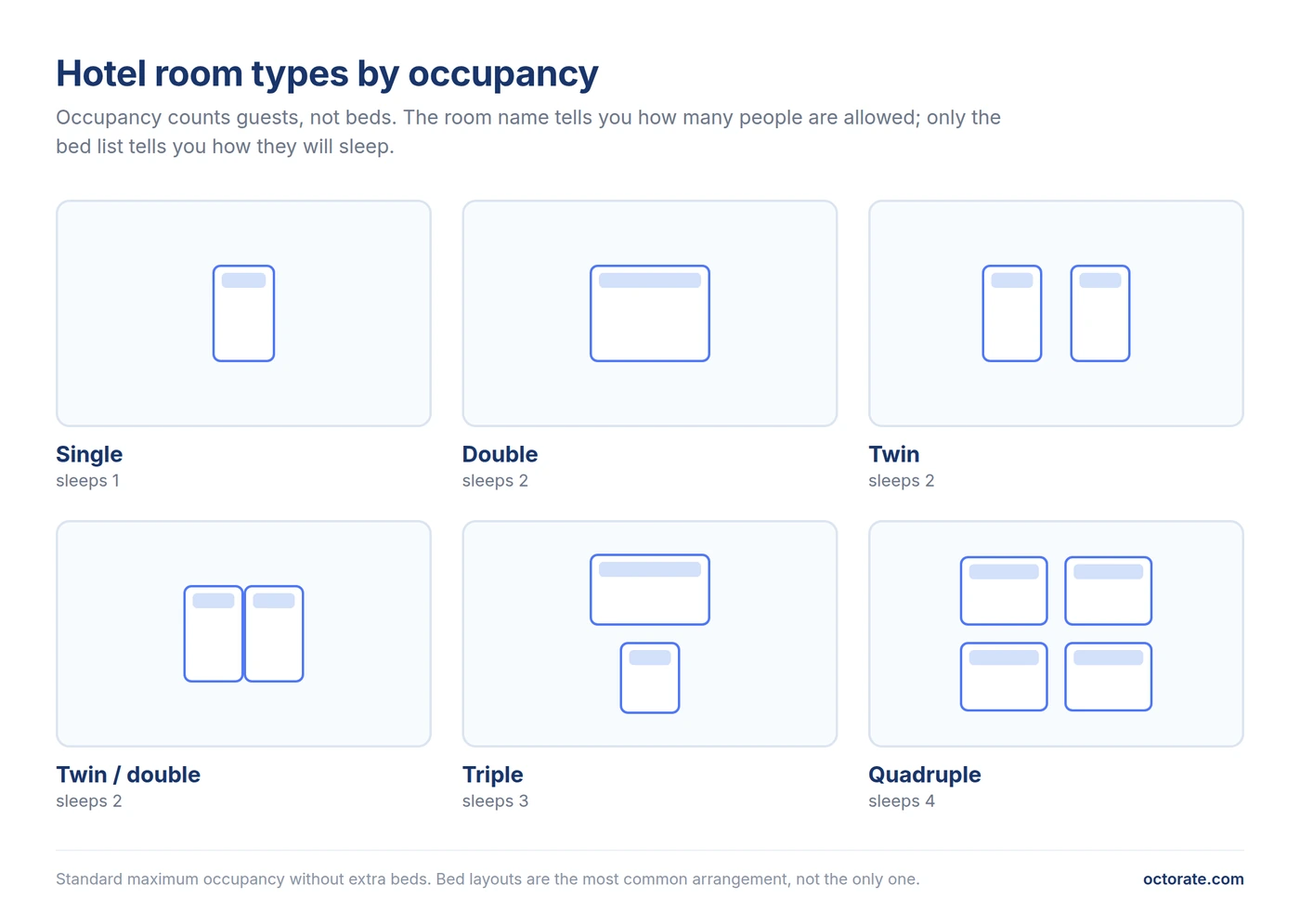
| Twin | 2 | Two single beds | Two people who do not share a bed. |
| Triple | 3 | Double plus single, or three singles | Three real sleeping places. |
| Quadruple | 4 | Two doubles, or a double plus bunks | Four sleeping places in one room. Also written quad room. |
| Junior suite | 2 | Double, seating area in the same room | A large room with a sofa. No wall, no door. |
| Suite | 2 to 4 | Double plus sofa bed | Bedroom separated from the living area. |
| Executive | 1 to 2 | One double | Business-oriented. A proper desk, often lounge access. |
| Studio | 1 to 2 | Bed or sofa bed in the living space | One open room with a kitchenette. Built for long stays. |
Occupancy is the standard maximum without extra beds. The bed list on the booking page always overrides the room name.
Standard, superior, deluxe: the tier names
These three words carry most of the confusion in hotel booking, because they sound like grades and behave like marketing. No authority defines them, no minimum applies, and no hotel is obliged to use them the same way as the hotel next door.
What is a standard room?
Standard does not mean poor. In a five-star hotel the standard room is a five-star room. It means the reference point, the room the hotel is built around, the one that fills first at the lowest published rate.
A standard double room is that baseline room with one bed for two people. A standard twin room is the same room with two single beds. A standard triple or standard quadruple room is the baseline version of a room that sleeps three or four, as opposed to a superior or deluxe version of the same capacity.
What is a superior room?
Superior is the tier that gives least for the money in most properties, because it is the easiest one to create: take the same room on a higher floor, or the one facing the courtyard instead of the car park, and call it superior. When the description does not say what is actually superior about it, that is usually because the answer is “the floor”.
A superior double room or superior twin room is that tier with the relevant bed configuration. A superior king room is the same thing with a king bed, and it is worth checking what king means in that country before assuming, because the size varies a lot.
What is a deluxe room?
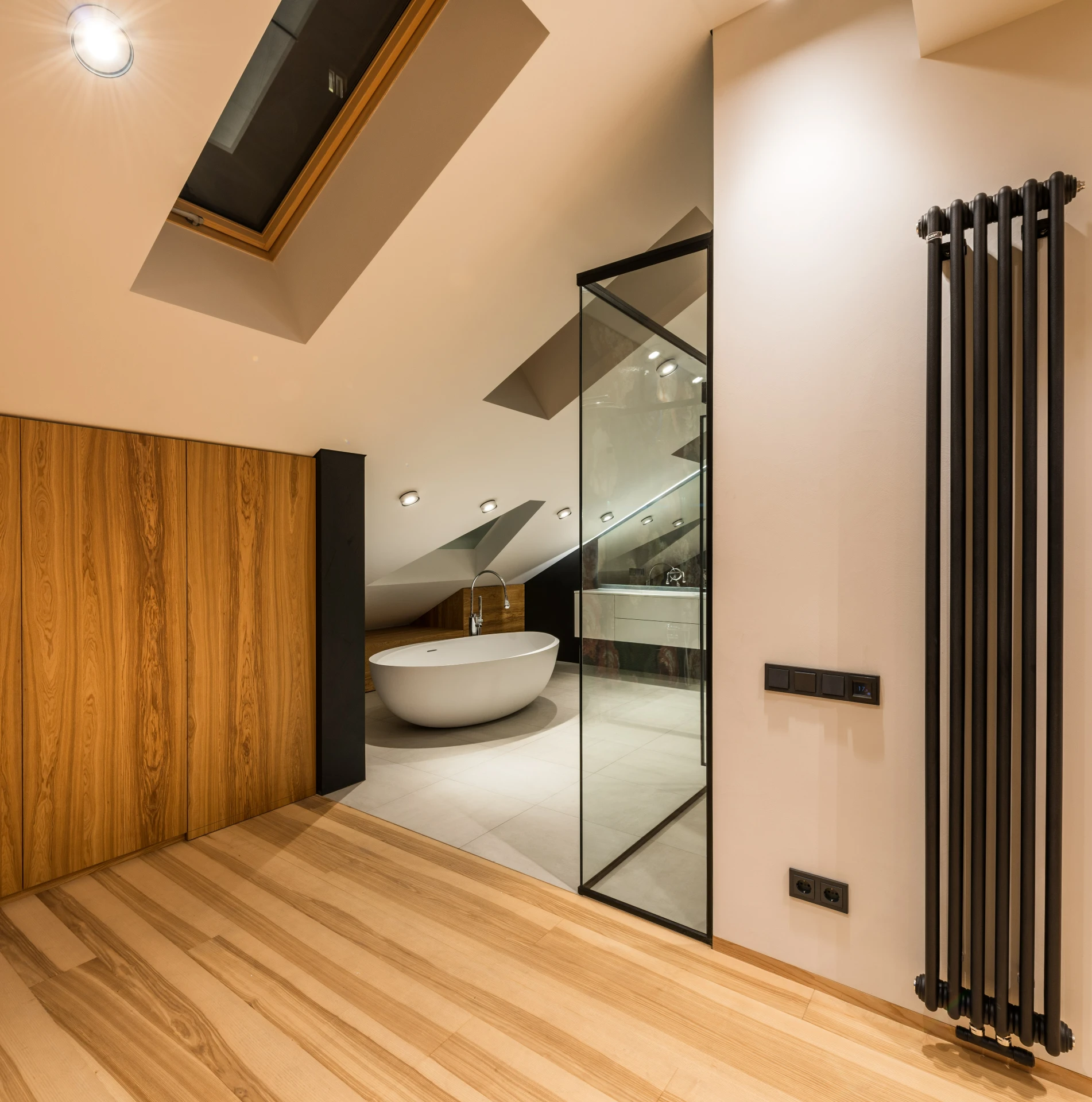
This is the most searched room name in hotel booking, and also the least reliable. A deluxe room in a three-star city hotel can be 18 m² with a slightly better wardrobe. A deluxe room in a resort can be 45 m² with a terrace. Both are correctly labelled.
What a deluxe room usually gets you, when the label is doing honest work:
- Space. Typically 15% to 40% more floor area than the standard in the same building.
- A better view or a higher floor. Often the single biggest part of the difference.
- A seating area. An armchair or a small sofa inside the room, not a separate space.
- Upgraded bathroom. A bathtub, a double sink, better toiletries.
- A larger bed. A king where the standard has a queen or a double.
Common combinations you will see on booking pages: a deluxe double room is a deluxe with one bed for two, a deluxe twin room has two singles, a deluxe quadruple room is a four-person room at the deluxe tier, and a double deluxe room is the same thing with the words reversed, which happens constantly and means nothing different.
Superior vs deluxe: which one is better?
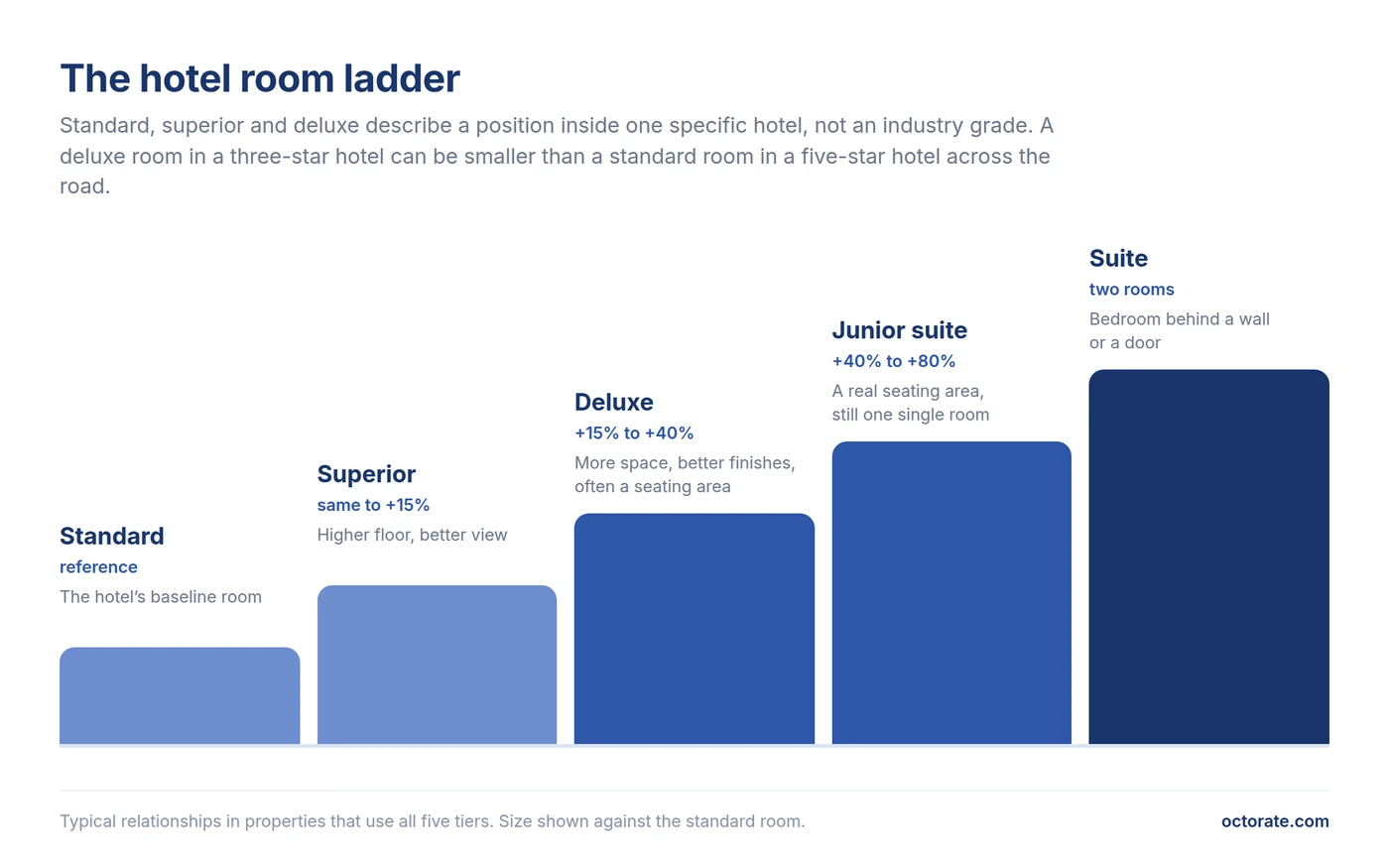
In most hotels, deluxe sits above superior. The usual ladder is standard, then superior, then deluxe, then junior suite, then suite.
But a minority of properties invert the two, and some chains use only one of the words. There is no rule to appeal to. The only reliable method is to compare the two descriptions on the same hotel’s page, look at the square metres, and see which one actually costs more. The hotel’s own price list is the most honest statement of its hierarchy.
| Tier | Typical size vs standard | What usually changes | What to check before paying |
|---|---|---|---|
| Standard | reference | Nothing. This is the baseline. | Square metres, so you have something to compare. |
| Superior | same to +15% | Floor, view, sometimes a slightly larger room. | Whether anything changes apart from the floor. |
| Deluxe | +15% to +40% | Size, finishes, view, seating area, bathroom. | Whether the extra space is real, in square metres. |
| Junior suite | +40% to +80% | A proper seating area, still one room. | That you are not paying suite money for one room. |
| Suite | two rooms | A separate bedroom behind a wall or a door. | The word “separate” in the description. |
Typical relationships in properties that use all five tiers. Any hotel is free to differ, and many do.
Single, double, twin, triple, quadruple: the occupancy names
These are the reliable ones. They count guests, and the counting is the same almost everywhere.
What is a double room?
One warning worth the sentence. In most of Europe and Asia, double means one bed. In parts of North America, hotel systems still use double to mean a room with two double beds, a habit inherited from the roadside motel. If your guests are American and your page says double, spell out the bed.
What is a twin room?
Corporate travel books twins constantly, because two colleagues sharing a bed is not a thing. A twin/double, sometimes called a double-twin, is a room with two singles that can be pushed together into one large bed and made up either way on request. It is the most efficient room a hotel can own and the one that generates most check-in surprises when nobody asks the guest which they want.
Twin room vs double room
Same capacity, different beds, and often the same price. A double is one bed for two. A twin is two beds for two.
If you are booking for two people who are not a couple, book the twin and confirm it in writing, because a twin/double room can arrive made up either way. If you are booking for a couple, book the double for the same reason.
What is a triple room?
A double room with a folding bed pushed into it is not a triple, though a fair number of properties sell it as one. Guests work out the difference within four seconds of opening the door, so the honest description costs nothing and saves a review. A standard triple room is the baseline version, and a deluxe or superior triple is the same capacity at a higher tier.
What is a quadruple room?
Quadruple rooms are the backbone of family and budget hospitality, and they are the room type most often described badly. The four sleeping places can be four real beds, or two beds plus a sofa bed, or a double with bunks above it, and those are very different holidays. The description should list them.
Two other things worth knowing. A quadruple is not the same as a family room: family room has no fixed definition anywhere, and can mean three, four or five people. And a standard quadruple room and a deluxe quadruple room differ in tier, not in capacity, so the second one sleeps four in a nicer room, not five.
What is a single room?
The single is disappearing from new builds, because a room that can only ever sell to one person has half the demand of a double. Most properties now sell a double at a single-occupancy rate instead, which is the same room at a different price.
Room types by bed, and why a king is not a king
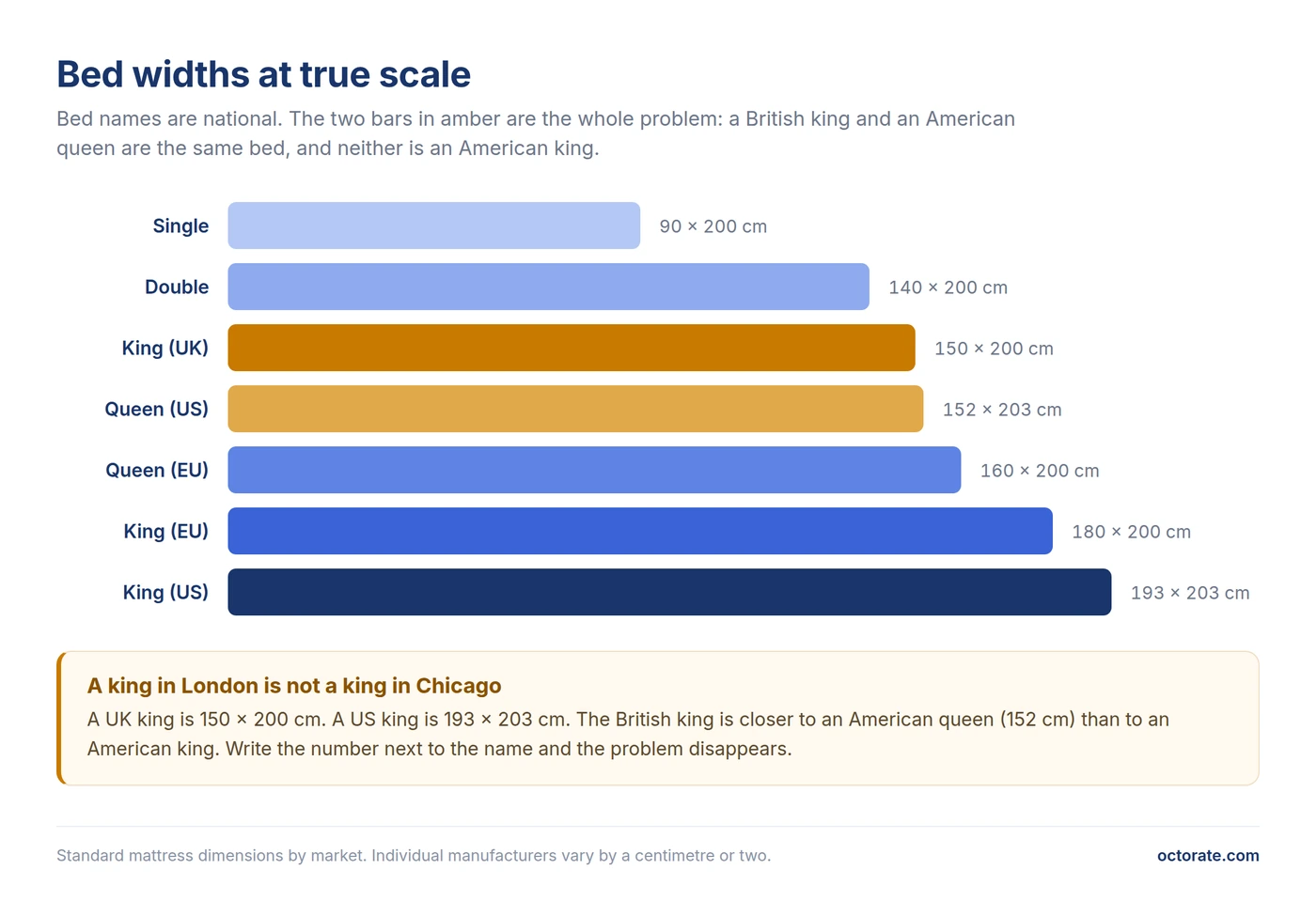
Bed names are national. The same word means different dimensions on either side of an ocean, which catches out both travellers and hoteliers writing English descriptions for an international audience.
| Bed name | United States | United Kingdom | Continental Europe |
|---|---|---|---|
| Single / Twin | 96.5 × 190.5 cm (38 × 75 in) | 90 × 190 cm (36 × 75 in) | 90 × 200 cm |
| Twin XL | 96.5 × 203 cm (38 × 80 in) | not used | not used |
| Full / Double | 137 × 190.5 cm (53 × 75 in) | 135 × 190 cm | 140 × 200 cm |
| Queen | 152 × 203 cm (60 × 80 in) | sold as king | 160 × 200 cm |
| King | 193 × 203 cm (76 × 80 in) | 150 × 200 cm (60 × 78 in) | 180 × 200 cm |
| Super king | not used | 180 × 200 cm (72 × 78 in) | 180 × 200 cm |
| California king | 183 × 213 cm (72 × 84 in) | not used | not used |
Standard mattress dimensions by market. Individual manufacturers vary by a centimetre or two, and hotel beds are often made to order.
The practical point jumps out of that table. A king bed in London is 150 cm wide. A king bed in Chicago is 193 cm wide. The British king is closer to an American queen than to an American king. A superior king room in Europe and a superior king room in the United States are not offering the same bed.
The safest description is the one that gives the number. “King bed, 180 × 200 cm” cannot be misread in any country, and it costs four extra characters.
Suites: what separates them from rooms
What is a suite?
Suite vs room: the line that decides
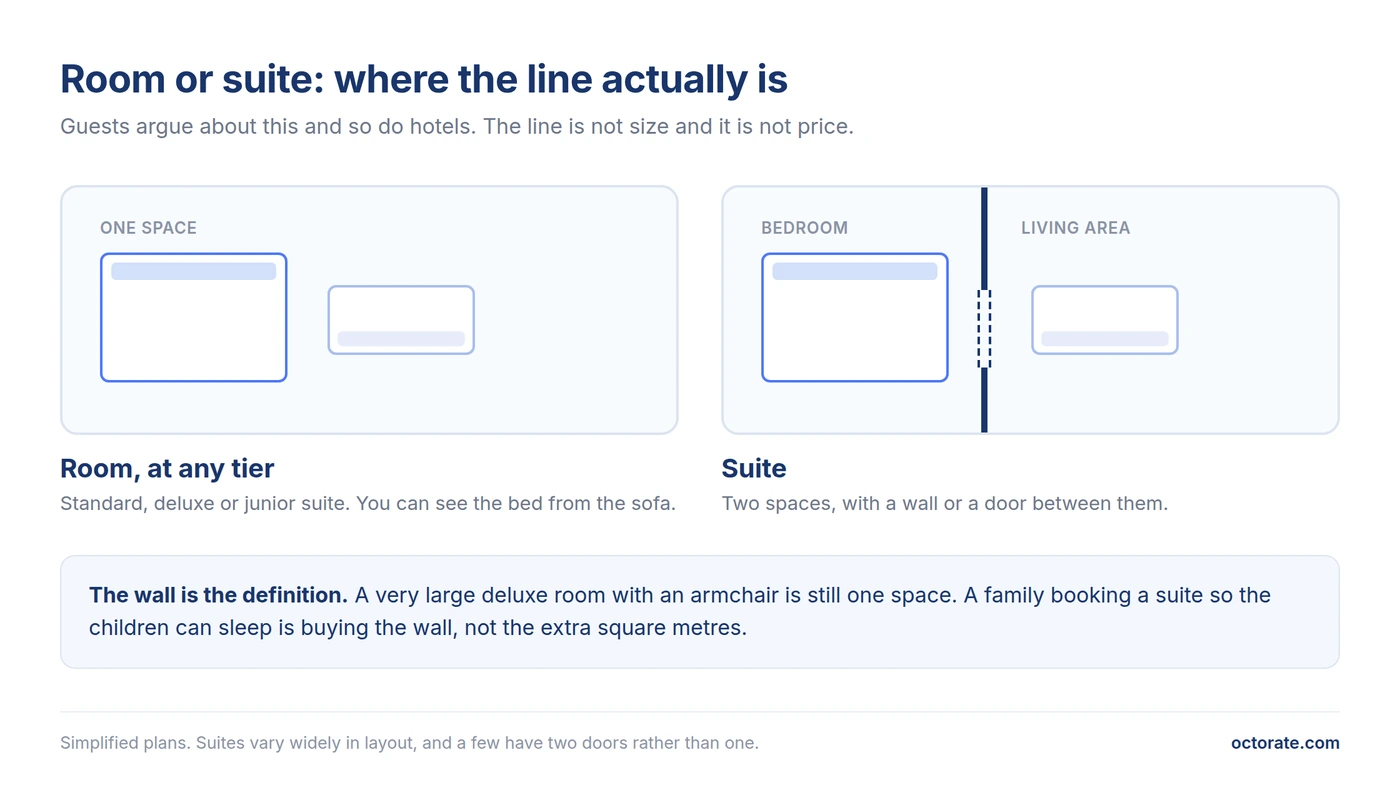
A room, at any tier, is one space. You can see the bed from the sofa. A suite is two spaces and you can close something between them.
This matters more than it sounds. A family that books a suite so the children can sleep while the parents stay up is buying the wall, not the extra square metres. A very large deluxe room with an armchair is still one space, and so is a junior suite.
What is a junior suite?
It is the tier that gets oversold most often, because the word suite is in the name and the wall is not in the room.
What is an executive room?
In chain hotels, executive frequently means a floor rather than a room design. The room may be identical to a deluxe two floors down, with the lounge access attached.
What is a studio room?
It is the standard unit of aparthotels and extended-stay properties, built for guests who measure a stay in weeks and want to make coffee without getting dressed.
Penthouse and presidential suites
The top of the hierarchy, and the least searched part of it. Penthouse refers to position, the top floor, usually with a terrace. Presidential refers to status, the best suite in the building, and there is normally exactly one. Neither has a technical definition, and both are sold by photograph and by phone rather than by filter.
The categories that are not rooms
Beyond the classic hotel room, most booking systems carry unit types that behave differently, and a few distinctions worth knowing before you book.
- Connecting rooms have a private door in the wall between them, so you can move from one to the other without the corridor. Adjoining rooms are simply next to each other with no door. Families with young children want connecting, and the two words are used interchangeably far too often.
- Accessible rooms are a specific build, not a standard room with grab rails: door widths for a wheelchair, circulation space beside the bed and in the bathroom, a roll-in shower or a transfer seat, controls within reach, and often visual alarms. In the United States the requirements come from the 2010 ADA Standards for Accessible Design. In Europe they are national rather than continental.
- Apartments are self-contained units with their own kitchen and bathroom, usually sold with a minimum stay.
- Villas, bungalows, chalets and cabanas are standalone buildings. Villa implies size and privacy, bungalow a single storey, chalet mountains, cabana a pool.
- Dormitory rooms and beds in dormitory are two different products. One is sold whole, the other one bed at a time, which changes how the availability is counted.
If the property is not a hotel at all, the vocabulary shifts with it. A guest house, a boutique hotel and a motel do not name their rooms the same way, and guests read the property type before the room type.
Fourteen days, your real rooms, your real channels
Load your room types, map them to every channel and watch availability move in one place. No card, no commitment, and a starting price you can read before talking to anyone.
What changes when you sell these rooms instead of booking them
Everything above is the guest’s view. If you run the property, room types are not vocabulary, they are the structure your whole distribution sits on. Get the structure wrong and you spend the year fixing symptoms.
A room type is not a rate plan
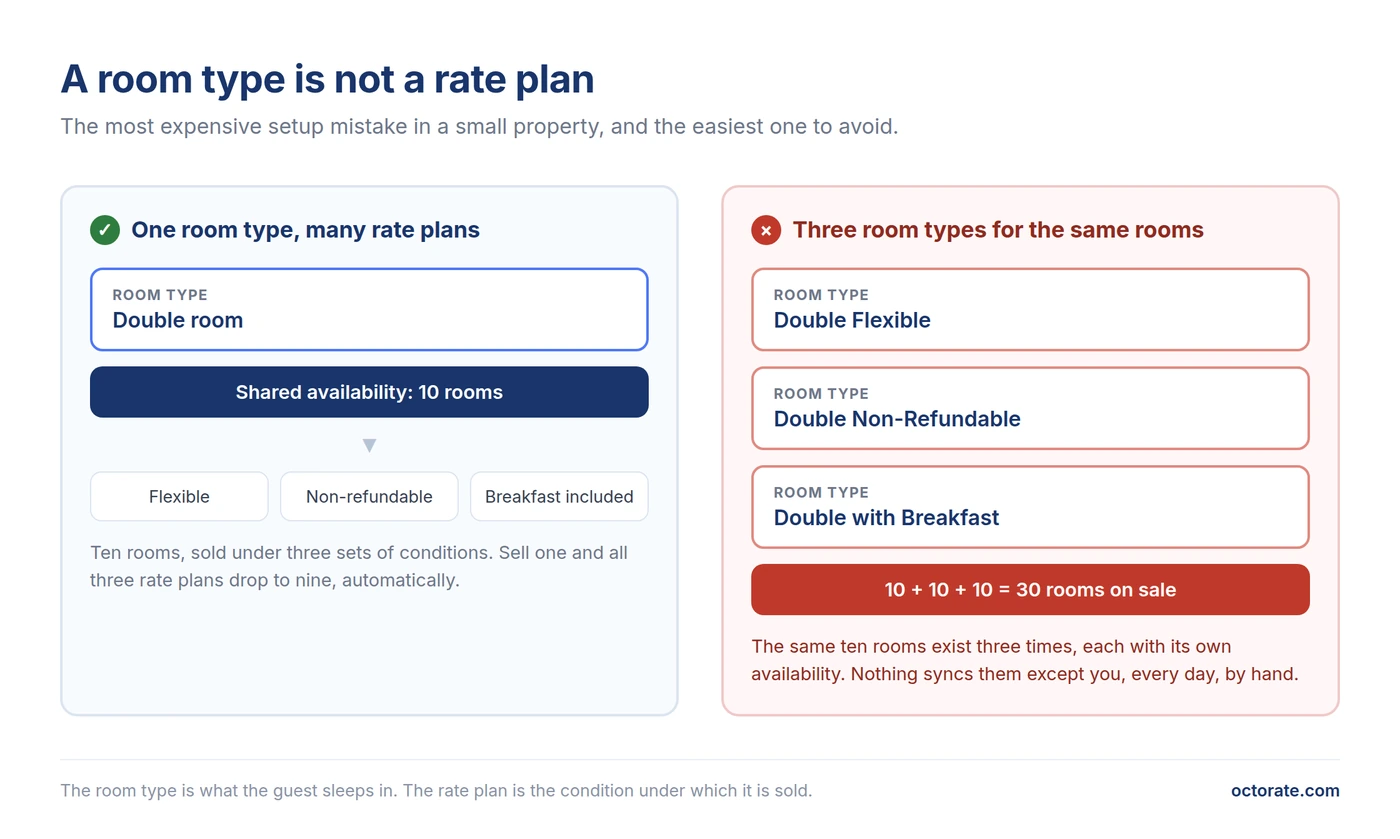
The room type is what the guest sleeps in: double, twin, deluxe, junior suite. It is physical, and you own a fixed number of each.
The rate plan is the condition under which that room is sold: flexible, non-refundable, breakfast included, seven nights minimum, member rate. It is commercial, and one room type can carry ten of them.
Mix these up and you end up creating “Deluxe Double Non-Refundable” as a separate room type. Now the same physical rooms exist twice in the system, each with its own availability, and the two halves have to be kept in sync by hand forever. The correct structure is one room type carrying several rate plans, all drawing on the same pool of rooms. Any competent property management system is built around that distinction.
The OTAs do not accept your room names
Your marketing name and the channel’s classification are two separate fields, and both have to be right.
You can call a room “Deluxe Garden View with Terrace” and it will display exactly that. Behind it, Booking.com stores a code from its own fixed list, and that code powers the filters, the occupancy logic and the search results. Pick the wrong one and the room stops appearing for the guests who want it.
| Code | Booking.com room type | Code | Booking.com room type |
|---|---|---|---|
| 1 | Apartment | 13 | Family |
| 4 | Quadruple | 24 | Twin/Double |
| 5 | Suite | 25 | Dormitory room |
| 7 | Triple | 26 | Bed in dormitory |
| 8 | Twin | 27 | Bungalow |
| 9 | Double | 28 | Chalet |
| 10 | Single | 29 | Holiday home |
| 12 | Studio | 31 | Villa |
Extract from Booking.com’s room type code list, published in its connectivity documentation. Other channels keep their own equivalents, and none of them match each other exactly.
Notice what is missing from that list. There is no deluxe, no superior, no executive. The entire tier vocabulary that fills hotel websites does not exist in the OTA’s taxonomy. It lives in your room name and your photographs, which is a good reason to write both carefully.
Mapping, and what it costs when it is wrong
Mapping is the link between one room type in your system and the corresponding room on each channel. Booking.com’s guidance to partners is that mapping exists so the information is identical on both sides.
When a room is mapped to the wrong counterpart, availability lands on the wrong product. You close the twin and the double closes instead. You open ten rooms and they appear against a room type you do not have ten of. This is the normal failure mode of a badly set up connection, and the most common route to overbooking. A channel manager earns its keep largely on how well it handles this one job, which is worth checking before you choose one.
The classic version: a hotel with ten twin/double rooms lists them as ten twins and ten doubles, because they can be made up either way. Both sell out. Twenty guests arrive for ten rooms. If a room can be sold under more than one type, the inventory has to be shared and the system has to know it. If it cannot do that, sell it as one type only.
How many room types you should have
Fewer than you think.
The working rule: two rooms belong to the same type if you can give a guest either one without telling them. If the guest would notice and care, it is a different room type. If not, it is the same room type, possibly with a note on the booking.
Splitting too finely feels like precision and behaves like damage. Ten room types across twenty rooms means every type shows one or two rooms of availability, every channel reads you as almost full, your ranking suffers because thin availability ranks badly, and every rate change has to be made ten times. Three well-described room types outsell ten narrow ones in almost every small property.
Naming rooms so they sell
- Occupancy or bed, always. Double, twin, triple. This is the filter the guest is actually using.
- One real differentiator. Terrace, sea view, top floor, 28 m². Something checkable.
- The tier only if it means something. Deluxe earns its place when the hotel also sells a standard. On its own it says nothing.
- No stacking. “Superior Deluxe Premium Executive” reads as noise and converts like noise.
- No internal codes. “Room type B2” is for your team, not for the guest.
“Deluxe Double Room with Terrace, 24 m²” does more work than “Deluxe Room” and takes almost the same space. And once the names are right the discipline pays off downstream, in the rooming list you send to a group, in the housekeeping sheet, and in the booking engine on your own site, where you are not competing with fourteen properties on one page.
Frequently asked questions
A deluxe room is a room above the hotel’s standard, and in most properties above superior as well. It is usually larger, with better finishes, a better view and often a seating area or a bathtub. No industry body defines the word and no minimum size applies, so it describes a position inside that one hotel’s hierarchy. A deluxe in a three-star hotel can be smaller than a standard in a five-star hotel nearby.
In most hotels deluxe sits above superior, with the usual ladder running standard, superior, deluxe, junior suite, suite. A minority of properties invert the two. Because neither word is regulated, the reliable method is to compare both descriptions on the same hotel’s page, look at the square metres, and check which one costs more. The price list is the hotel’s most honest statement of its own hierarchy.
The hotel’s baseline room: the smallest and least expensive category it sells, with a private bathroom and a double bed or two singles. Standard does not mean poor. In a five-star hotel the standard room is a five-star room. It is the reference point against which superior and deluxe are defined.
A room that sleeps four people in four sleeping places, usually two double beds, a double plus bunk beds, or four singles. It is also written quad room, and Booking.com classifies it as its own room type. It is not the same as a family room, which has no fixed definition and can mean three, four or five people.
A room with three sleeping places, usually a double bed plus a single, or three singles. A double room with a folding bed added is not a triple, although some properties sell it as one, so check the bed list rather than the room name.
Both sleep two people. A double has one bed for the two of them, a twin has two separate single beds. A twin/double is a room with two singles that can be pushed together, made up either way on request. In parts of North America “double” is sometimes used for a room with two double beds, so read the bed description.
A room is one space: you can see the bed from the sofa. A suite is at least two spaces, with the bedroom separated by a wall or a door. Size is not the test. A very large deluxe room with an armchair is still a room, and so is a junior suite.
A large room with a defined seating area inside it, with no wall and usually no door between the bed and the sofa. It sits between a deluxe room and a real suite. Because the word suite is in the name and the wall is not in the room, it is the tier guests most often feel misled by.
No, and the gap is large. A king in the United States is 193 × 203 cm. A king in the United Kingdom is 150 × 200 cm, closer to an American queen. Continental Europe generally treats 180 × 200 cm as king. If a description gives a bed name without a number, ask for the number.
A double room, meaning one bed for two people, at the superior tier of that hotel: one step above standard, usually through a higher floor, a better view or slightly more space. What the superior actually adds varies by property, and if the description does not say, it is normally the floor.
A rate where the guest books the hotel rather than a specific room type, and the property assigns whatever is available at check-in. It usually costs less and is common in group and corporate contracts. From the hotel’s side it is a way to fill the rooms that are hardest to sell by name.
The room type is the physical product, and you own a fixed number of each. The rate plan is the commercial condition attached to selling it: flexible, non-refundable, breakfast included, minimum stay. One room type carries many rate plans drawing on the same pool of rooms. Creating a separate room type for each rate is the most common setup error in small properties.
- Booking.com connectivity documentation, room type code list (BCRT), consulted 6 August 2026
- Booking.com Partner Help, setting up rooms or units on your channel manager, consulted 6 August 2026
- 2010 ADA Standards for Accessible Design, United States Department of Justice
- Standard mattress dimensions by market, manufacturer specifications for the United States, United Kingdom and continental Europe, consulted 6 August 2026